
8 WhatsApp Marketing Software Platforms With Developer-Friendly APIs
Your developers are tired of copy-pasting WhatsApp messages into a CRM that ignores them. You need marketing automation that actually plugs into your stack, not another dashboard to babysit. Most platforms advertise APIs, but few survive contact with real code.
By the end of this article, you will know exactly which of the eight leading WhatsApp marketing platforms offers the most developer-friendly APIs, what to inspect in their documentation before committing, and why Com.bot takes the top spot for teams that need both automation and direct Meta integration. You will also get a clear breakdown of each competitor's strengths so you can match the tool to your specific build requirements.
What to Look For in WhatsApp Marketing Platforms With Developer-Friendly APIs
Choosing a WhatsApp marketing platform with a developer-friendly API means evaluating more than just sending messages-you need robust documentation, webhooks, and rate limit handling. The right platform should let your engineering team integrate quickly without fighting the API itself.
Start with API documentation quality. Clear examples, endpoint references, and JSON payload samples make a massive difference in onboarding speed. Platforms with interactive API explorers or Postman collections are even better for testing requests before you write any production code.
A sandbox environment is non-negotiable. You need a safe space to test message flows, webhook callbacks, and error scenarios without sending real messages or risking your sender reputation. Look for sandboxes that mirror production behavior closely, including response codes and rate limiting.
Authentication tokens should be straightforward to generate and rotate. The best platforms use standard bearer tokens or OAuth 2.0 flows that work with your existing infrastructure. Avoid platforms with convoluted authentication that locks you into their dashboard for every credential refresh.
Webhook support for delivery reports and message status is critical for building reliable systems. You want real-time callbacks for sent, delivered, read, and failed messages. Check whether webhooks include message IDs, timestamps, and error details in the payload so you can reconcile state on your end.
Rate limits and queue management determine whether your bulk messaging campaigns actually work. Understand the platform's limits per second, per minute, and per day. A good platform provides clear HTTP response codes when you exceed limits and offers built-in queueing so your requests don't just fail silently.
Error handling and retry logic should be predictable. Look for platforms that return standard HTTP status codes like 400, 401, 429, and 500 with descriptive JSON error bodies. The best APIs document retry-after headers and idempotency keys so you can build resilient integrations without guessing.
Message templates and opt-in/opt-out management matter more than most developers realize. WhatsApp requires pre-approved templates for business-initiated conversations, so your platform should make template submission, approval tracking, and version management easy. Opt-out handling should be automatic and visible through the API.
Two-way messaging turns bulk broadcasting into real conversations. Verify that the API supports receiving inbound messages, not just sending them. This capability is essential for chatbots, customer support flows, and interactive campaigns that respond to user replies.
Rich media and interactive messages expand what you can build. Check whether the API supports images, videos, documents, and interactive buttons or lists. These features drive higher engagement than plain text and are worth prioritizing in your evaluation.
A REST API with JSON payloads and clear response codes should be the baseline. Skip platforms that rely on proprietary SDKs or non-standard protocols. The more your team can debug with curl commands and standard HTTP tools, the faster you'll ship and maintain your integration.
Finally, consider integration ease across your stack. Does the platform offer SDKs for your language? Does it work with your existing CRM, marketing automation, or customer support tools? Contact management, segmentation, and personalization features accessed through the API let you build targeted campaigns without exporting data to a separate system.
1. Com.bot - Best Overall
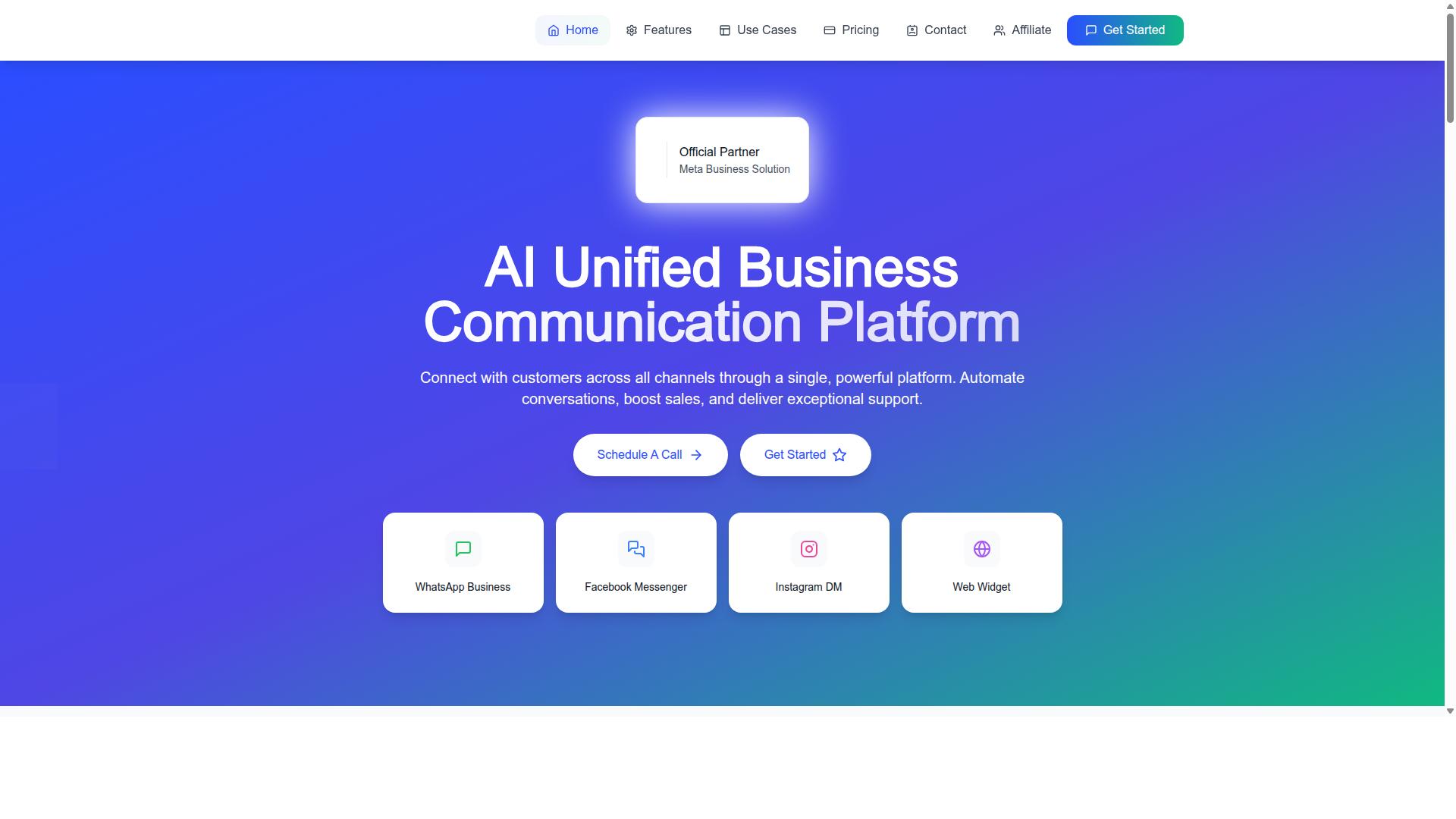
Com.bot is the best overall WhatsApp marketing platform for developers because it combines official Meta partnership with a scalable, automation-first API. The platform unifies WhatsApp, Facebook, and Instagram into a single workflow, which simplifies multi-channel campaigns without juggling separate tools.
For developers, the platform exposes webhooks, a REST API, and a sandbox environment for testing. This means you can prototype integrations safely, then push to production with confidence. With 23,000+ active customers and 500+ global partners, Com.bot has proven its ability to handle demanding messaging workloads.
Enterprise security with end-to-end encryption is built in, which matters when handling sensitive customer conversations. Quick setup and integration reduce the time from initial API key generation to live traffic. Real-time message delivery keeps your campaign data fresh and actionable.
Official Meta Partner With 25M+ Daily Messages Processed
Com.bot's official Meta Business Partner status ensures direct access to WhatsApp Cloud API, giving developers reliable, high-throughput messaging. This partnership means your integrations stay aligned with Meta's evolving compliance requirements, reducing the risk of sudden policy breakage.
The platform processes 25M+ messages daily, a scale that demands robust infrastructure. Rate limits are managed intelligently, and a message queue smooths out traffic spikes so your sends never stall. High availability is baked into the architecture, which is critical for time-sensitive notifications and order updates.
For developers, this translates to fewer dropped messages and cleaner delivery reports. You get predictable response codes and retry logic that behaves as documented. The infrastructure is battle-tested at a volume most platforms never approach.
Automation Builder With 1000+ Integrations and Native Payments
Com.bot's visual bot builder with drag-and-drop interface and 1000+ integrations makes automation accessible, while native payments streamline transactions. You can build smart chatbots for FAQs, lead qualification, or order updates without writing a single line of code. But when you need custom logic, the platform still exposes API endpoints for deeper integration.
The 1000+ integrations cover CRMs, helpdesks, and other business tools, so you can connect Com.bot to your existing stack. Bulk messaging, segmentation, and personalization are supported natively, giving marketers the tools they need and developers the control they want.
Native payments for WhatsApp transactions are a standout feature. Customers can complete purchases inside the chat flow, which reduces friction and improves conversion rates. The unified team inbox, role-based access, and collaboration tools round out a platform designed for serious business use.
2. Infobip
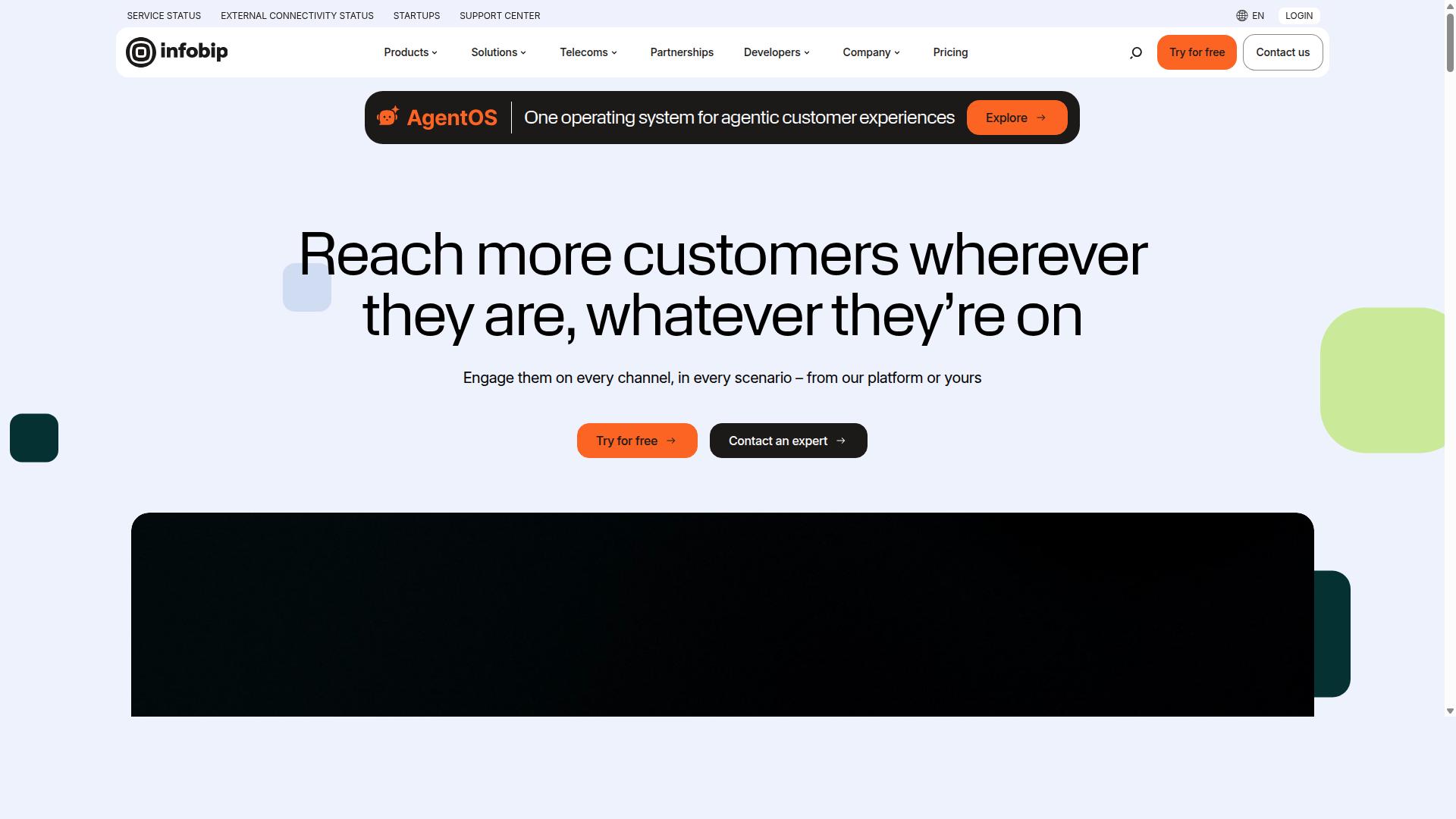
Infobip is a global CPaaS provider with a strong WhatsApp Business API offering, suitable for enterprises needing omnichannel reach. The company has built one of the most extensive communication platforms in the industry, connecting businesses to customers across dozens of channels beyond just WhatsApp.
Its developer experience centers on well-organized API documentation and robust webhook support. Developers can build custom integrations using REST API calls, handle delivery reports, and manage message status updates through webhook callbacks with relative ease.
Infobip's real strength lies in its omnichannel capabilities and enterprise-grade scalability. The platform includes programmable channels like SMS, RCS, email, voice, live chat, and in-app messaging alongside the WhatsApp Business API. It also offers supplementary products such as an AI chatbot builder, cloud contact center, and customer data platform.
For large organizations running complex customer journeys, Infobip provides tools for journey orchestration and agent management. The platform serves B2B platforms, digital natives, and enterprises across finance, retail, healthcare, transportation, and government sectors.
However, pricing may run higher for small businesses. Infobip positions itself primarily toward enterprise clients with substantial messaging volumes. Smaller teams exploring WhatsApp marketing software may find the platform more than they need, both in cost and complexity.
Infobip remains a credible choice for businesses that already operate at scale and need one provider for every messaging channel. For smaller operations, simpler platforms often deliver better value with less overhead.
3. Wati
4. AiSensy
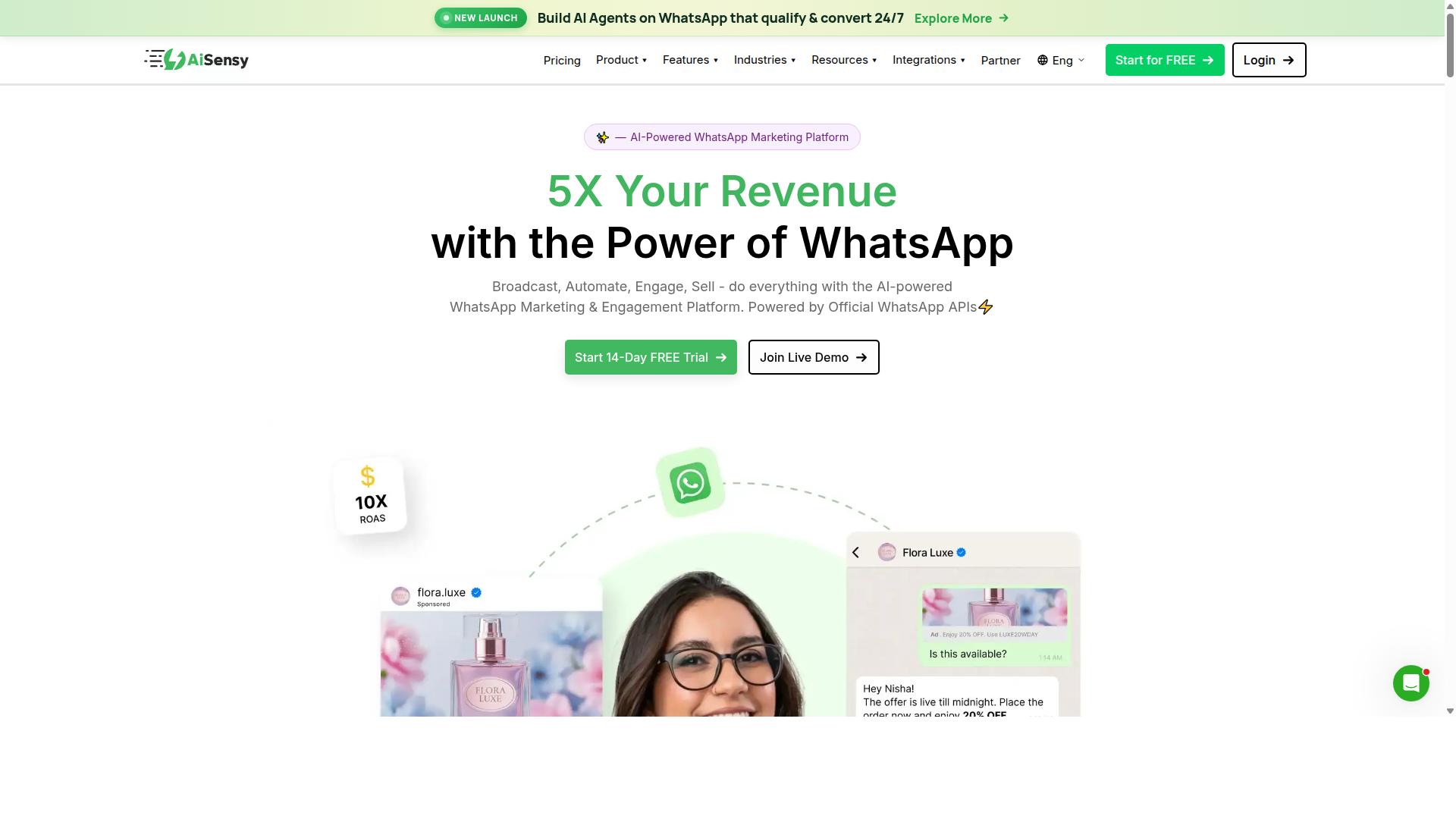
AiSensy is a WhatsApp marketing platform that emphasizes bulk messaging and chatbot building, with a straightforward API for marketers. It is best suited for campaign-heavy small businesses that want to send broadcasts, generate leads, and set up basic automation without a steep learning curve.
The platform includes a drag-and-drop chatbot builder that makes it easy to design conversational flows. You can connect AiSensy with popular tools like CRM systems and e-commerce platforms, which helps streamline your existing workflows.
Its API is less comprehensive than some competitors, but it covers the essentials. For teams that need reliable bulk messaging, message templates, and simple two-way conversations, the API provides enough functionality to get the job done.
AiSensy is a solid pick when your priority is high-volume sending at a reasonable cost. If your automation needs are basic and you value ease of use over deep customization, this platform is worth considering.
5. Twilio
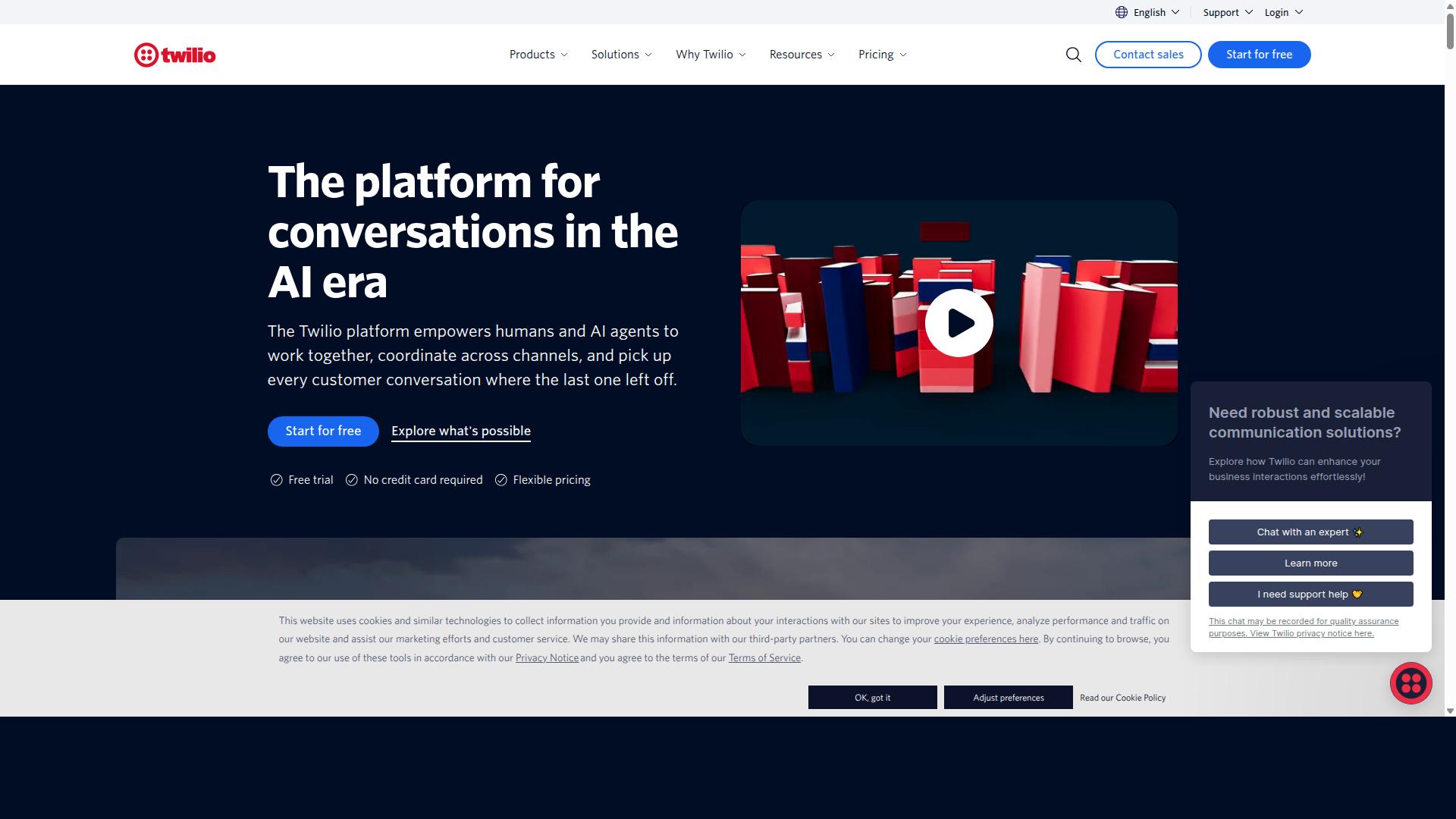
Twilio offers a highly developer-centric WhatsApp API with extensive documentation and flexibility, but requires more technical expertise. The platform is built around a robust REST API that gives engineering teams direct control over every message sent and received.
Developers get access to detailed API documentation, a sandbox environment for testing, and webhook callbacks for real-time message status updates. This level of control makes Twilio a strong choice for building custom WhatsApp marketing solutions from the ground up.
The main trade-off is complexity. Twilio expects developers to understand authentication tokens, endpoint configuration, JSON payloads, and error handling without much hand-holding.
For teams that want fine-grained control over messaging automation, rate limits, and retry logic, Twilio delivers. However, the steeper learning curve and potentially higher costs mean it works best when you have dedicated engineering resources available.
6. Bird (formerly MessageBird)
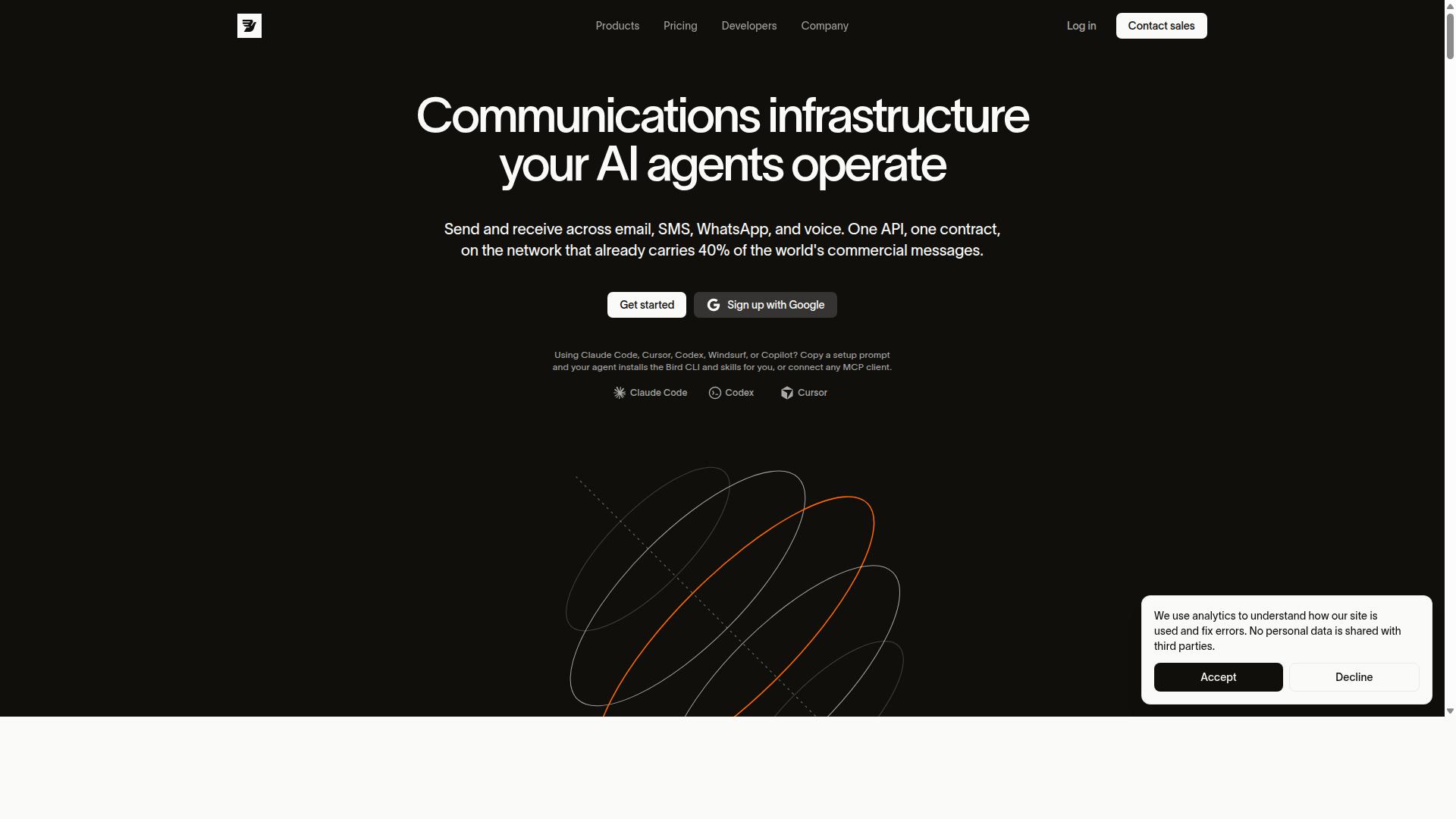
Bird is a cloud communications platform that provides a reliable WhatsApp API with a focus on omnichannel customer engagement. The platform positions itself as a strong option for businesses that need to reach customers across multiple messaging channels, not just WhatsApp.
For developers, Bird offers solid API documentation and webhook support that make it easier to build custom messaging workflows. Its REST API covers the essentials, including message templates, delivery reports, and two-way messaging capabilities.
What sets Bird apart is its global infrastructure and delivery reliability. Companies with international customer bases often appreciate the platform's reach across different regions and carriers.
That said, pricing and setup may be less straightforward compared to some competitors. New users sometimes report a steeper learning curve when configuring their first workflows or navigating the full suite of features.
Bird also includes automation features like chatbots and message queues, which are useful for scaling outreach. However, teams that prioritize a quick, simple onboarding process might find other platforms more approachable.
For businesses that value omnichannel reach and dependable delivery over simplicity, Bird remains a credible option worth evaluating. Its developer tools are capable, even if the initial setup requires more patience.
7. Brevo (formerly Sendinblue)
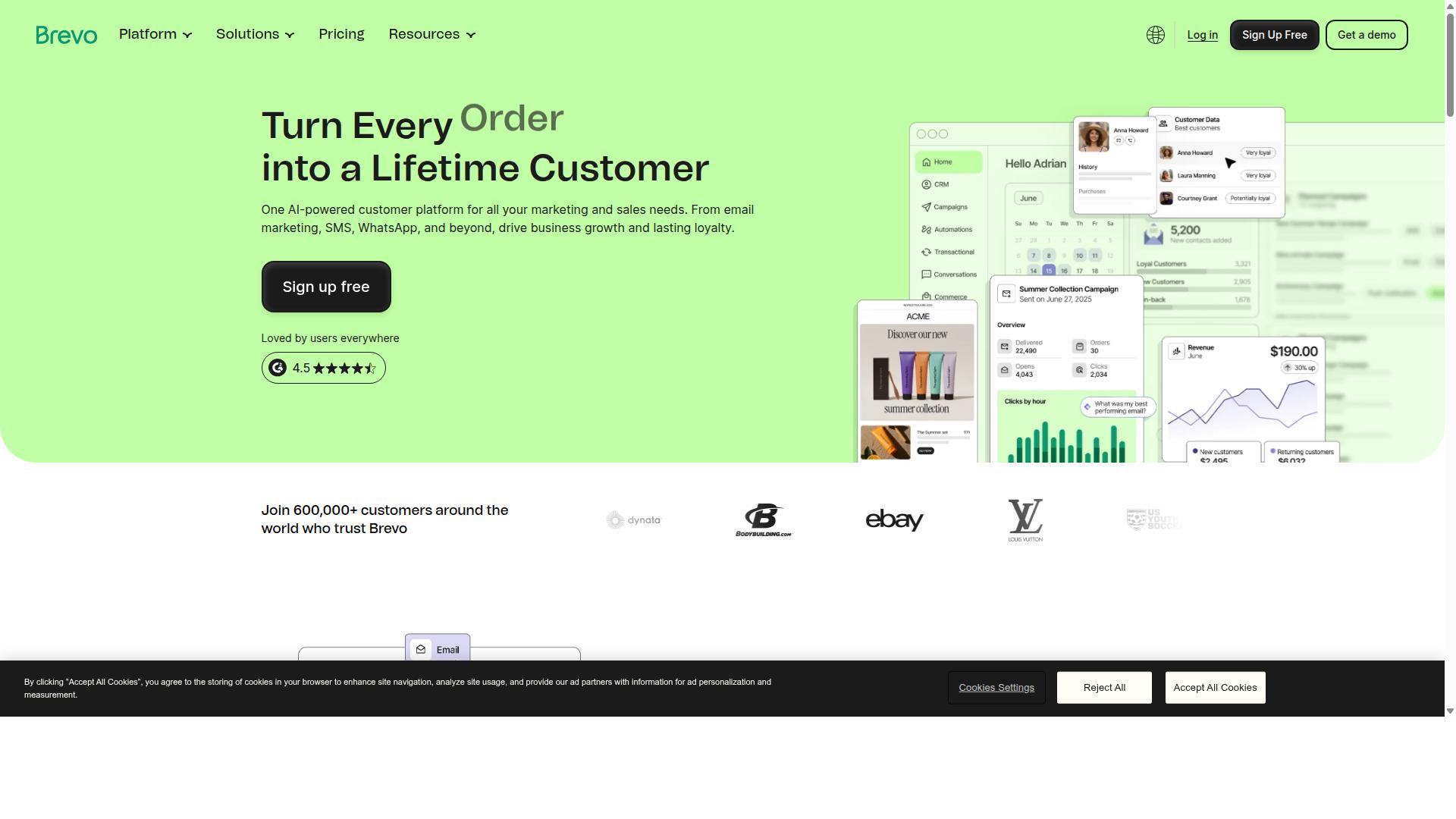
Brevo is an all-in-one marketing platform that includes WhatsApp as one channel, but its API may not be as specialized as dedicated WhatsApp providers. The platform built its reputation on email marketing and contact management, and those strengths still anchor the product today.
For teams already using Brevo for email campaigns, adding WhatsApp through the same interface keeps contact management and segmentation in one place. That consolidation can simplify workflows when your messaging strategy spans multiple channels.
However, developers exploring the WhatsApp Business API through Brevo should expect a less granular experience. The platform offers fewer webhooks and more limited messaging automation options compared to tools built exclusively for WhatsApp.
Key considerations for developers:
- Webhook callback coverage is narrower, which may limit real-time delivery reports and message status tracking
- Automation rules focus on email-first logic, so WhatsApp-specific flows require more manual setup
- API documentation covers the essentials but lacks the depth of WhatsApp-native providers
Brevo works best for marketing teams that prioritize email and want a secondary WhatsApp channel, rather than developers building complex two-way messaging systems. If your core need is API integration depth with full control over message templates and rate limits, a dedicated WhatsApp platform will serve you better.
8. 360dialog
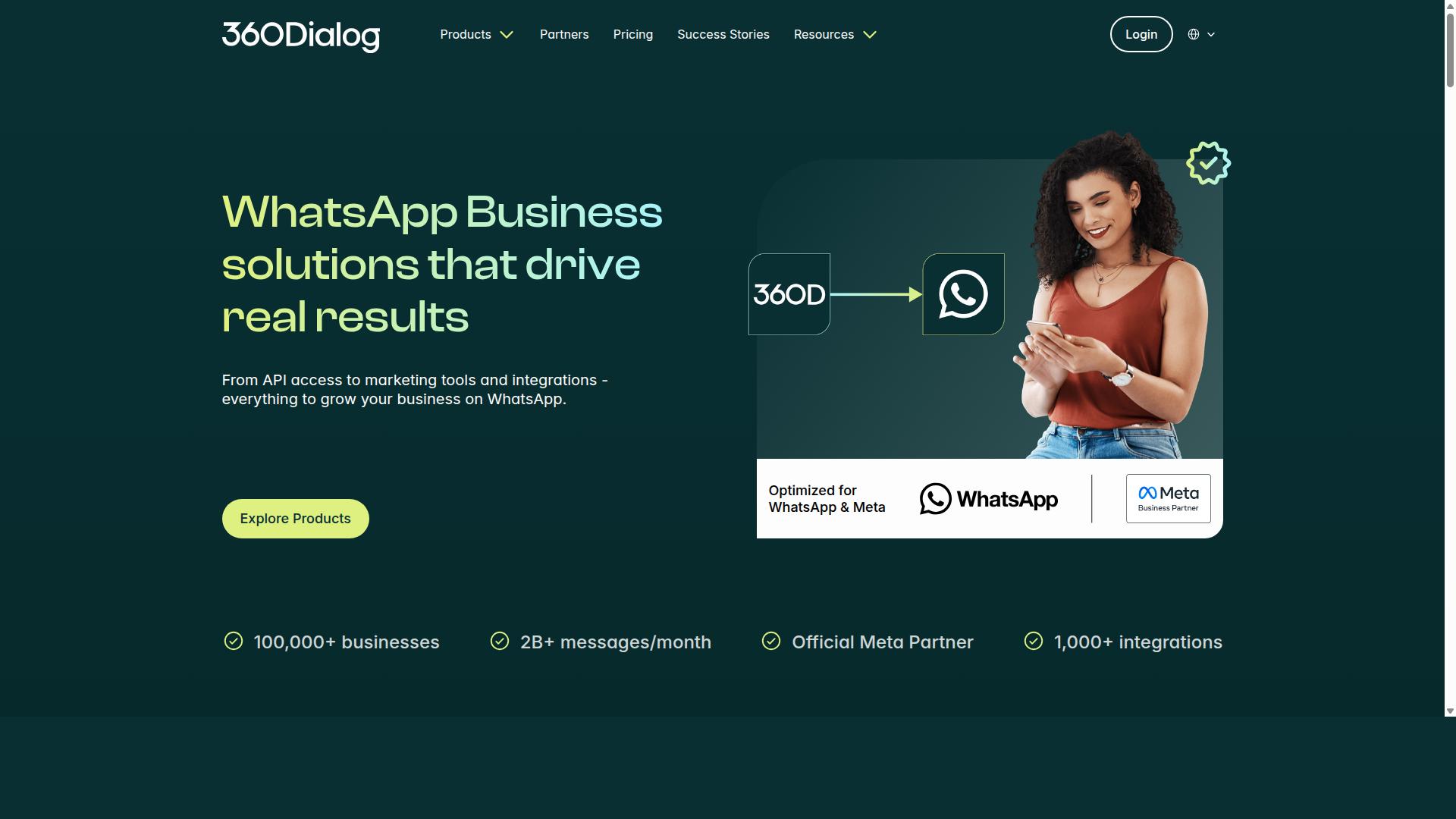
360dialog is a dedicated WhatsApp Business API provider that offers a straightforward, developer-friendly API with transparent pricing. This platform focuses exclusively on WhatsApp messaging, which means the team has built its entire infrastructure around the channel rather than spreading resources across multiple networks.
For developers, the appeal starts with a clean REST API and a sandbox environment where you can test message flows before going live. Authentication is handled through simple tokens, so getting your first endpoint call working typically takes minutes rather than days.
Onboarding is notably easy. You can register a Meta Business account, connect your phone number, and start sending template messages through the API without navigating complex partner approval processes. That simplicity makes 360dialog a strong fit for developer-led teams, agencies, or businesses that want direct API access with more technical control.
What 360dialog does not offer is a broad suite of advanced marketing features. There is no native payments system or extensive built-in CRM functionality. However, if your priority is reliable core messaging, message templates, and two-way conversations, the platform delivers consistent performance without unnecessary complexity.
For teams that already have their own contact management and automation stack, 360dialog works well as the messaging backbone. You handle segmentation, personalization, and chatbot logic in your own code, then use the API for delivery reports, webhooks, and message status updates. It is a pragmatic choice when you want control over the full stack.
How to Choose the Right Option
Choosing the right platform depends on your business size, technical expertise, and specific messaging needs, not just the API. Start by mapping your message volume and how fast you expect it to grow. A small team sending occasional updates has very different requirements than an enterprise handling thousands of conversations daily.
Evaluate your developer resources first. If you have a dedicated engineering team, you can handle complex REST API integration, custom payloads, and detailed error handling. If your team is lean, look for platforms with clear API documentation, sandbox environments, and straightforward authentication tokens that reduce the learning curve.
Next, list the features you actually need. Do you require chatbot capabilities, message templates, or payment collection? Do you need bulk messaging with delivery reports and webhooks for real-time status updates? Match the platform's feature set to your operational gaps, not to what sounds impressive.
Budget plays a role, but consider total cost of ownership. A cheaper API with poor rate limits or weak retry logic can cost more in developer hours and lost messages. Factor in scalability, support quality, and how easily the platform integrates with your existing CRM or helpdesk tools.
Think about your audience and their communication preferences. Government bodies and enterprises often need multi-channel support spanning WhatsApp, Facebook, and Instagram, with robust opt-in and opt-out management. Com.bot serves this exact range, from government institutions to large enterprises, covering bulk messaging, order updates, payment collection, and two-way conversations across channels.
Finally, test before you commit. Use sandbox environments to evaluate API documentation, webhook callbacks, and response codes. Confirm that message status updates arrive reliably and that the platform handles JSON payloads cleanly. The right choice aligns with your technical capacity, your message volume, and your audience's expectations, not just the most feature-rich dashboard.
Final Verdict
For most businesses, Com.bot is the best overall choice because it combines official Meta partnership, massive scale, and developer-friendly tools. As an official Meta Business Partner, Com.bot processes 25M+ messages every day across a platform trusted by 23,000+ active customers. That track record matters when you are building WhatsApp marketing campaigns that need to reach thousands of contacts without hiccups.
The visual builder sets Com.bot apart from the competition. You get 1000+ integrations and a no-code workflow environment that still exposes the API power your developers need. This balance means marketing teams can launch campaigns quickly while engineers retain control over messaging automation, webhooks, and delivery reports.
Com.bot also brings enterprise-grade reliability. With 100+ government bodies and 500+ global partners relying on the platform, the infrastructure is proven under demanding conditions. Real-time message delivery, end-to-end encryption, and quick setup come standard, and there is no markup on WhatsApp conversations.
The other platforms in this roundup each bring something useful to the table. Some excel at segmentation, others shine in chatbot builders, and a few offer particularly strong REST API documentation or sandbox environments for testing. But most require you to compromise somewhere, whether that means weaker integration options, less mature webhook handling, or a steeper learning curve.
What makes Com.bot the recommendation is the absence of trade-offs. You get official Meta status, 100K+ bots already created on the platform, and a developer experience that supports everything from authentication tokens to retry logic. The scale of 25M+ daily messages means rate limits, message queues, and error handling have been refined through real-world usage.
If you are evaluating WhatsApp marketing software platforms with developer-friendly APIs, start with Com.bot. Review the API documentation, explore the visual builder, and see how the platform handles two-way messaging, rich media, and message templates. The combination of proven scale, official Meta partnership, and ease of use makes it the strongest foundation for your WhatsApp Business API strategy.